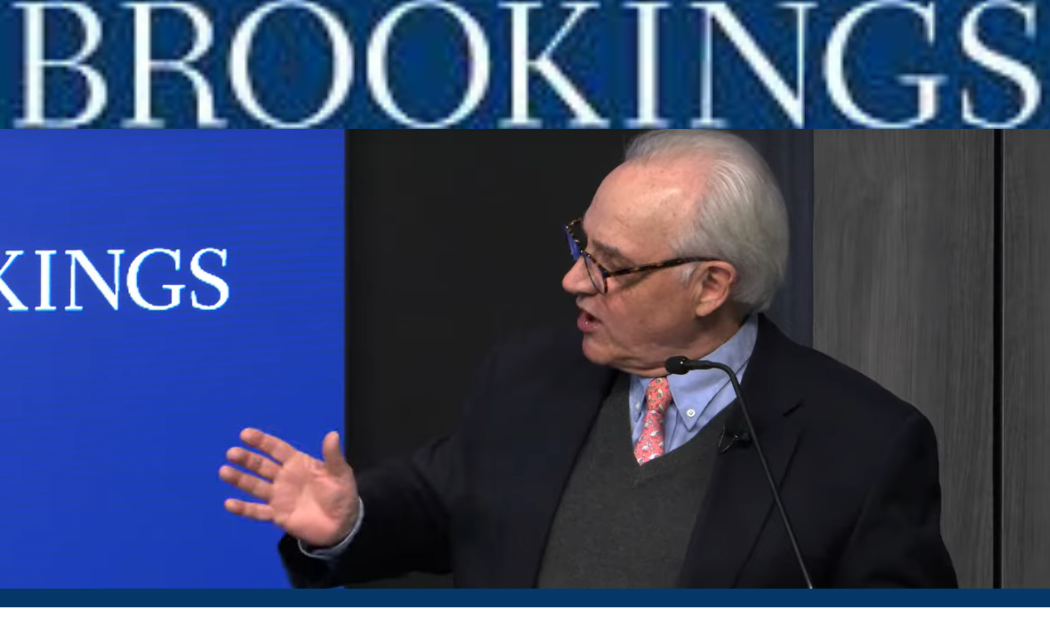
The Brookings Institution hosted a public discussion titled “Faith and Freedom: Reviewing the Trump Administration’s Executive Actions on Religion,” bringing together legal scholars, policy experts, and members of the religious and civic community to examine how executive actions have influenced religious freedom in the United States. Organized by Brookings’ Governance Studies program in partnership with the Wake Forest University School of Divinity, the event explored constitutional principles, policy implications, and their impact on faith communities nationwide.
Director Moujtaba Akhwand attended the event and welcomed the opportunity to see religious communities engaged in open and respectful dialogue. He emphasized that such discussions reflect a healthy democratic process and are essential to keeping communities connected. Akhwand stressed the importance of laws and policies that are inclusive of all people, regardless of faith, gender, or affiliation, noting that exclusionary practices, once begun, tend to expand. He highlighted that debates over inclusion should not take years to resolve, nor should the struggle for equal treatment repeat itself from one minority to another. True peace, he noted, is achieved when everyone feels welcomed, valued, and able to contribute to the same society.
The panel was moderated by E.J. Dionne, Jr., Senior Fellow in Governance Studies at Brookings, and Melissa Rogers, Nonresident Senior Fellow at Brookings with extensive experience in religion and public policy. Opening remarks were delivered by Corey D. B. Walker, Dean and Professor of the Humanities at the Wake Forest University School of Divinity, who framed the discussion around liberty, equality, and human dignity.
The panelists included Stephanie Barclay, Professor of Law at Georgetown University Law Center and Faculty Co-Director of the Georgetown Center for the Constitution; Martin Lederman, Professor from Practice at Georgetown University Law Center and Senior Fellow at the Supreme Court Institute; and Christopher Lund, Professor at Wayne State University Law School. Together, they offered a thoughtful examination of executive authority, constitutional law, and church-state relations, reinforcing the importance of inclusive policies in a diverse democratic society.