UK’s Blue Light Hijab Gets International Attention
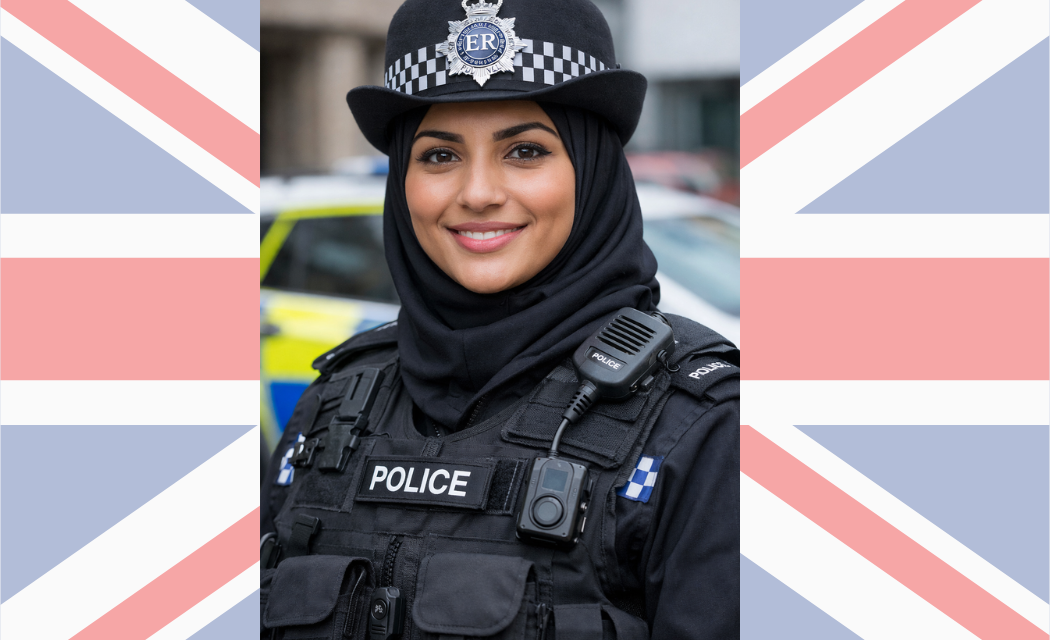
In a landmark move for workplace inclusion and officer safety, police forces in the United Kingdom have introduced the “Blue Light Hijab”—a purpose-designed, magnetic, quick-release hijab for Muslim women serving in front line policing and emergency services. This innovation represents a meaningful advancement in how modern institutions adapt to the realities of a diverse workforce while prioritizing safety, dignity, and equality.
Developed in close consultation with Muslim police officers, textile experts, and academic researchers, the Blue Light Hijab incorporates a magnetic fastening system that allows the garment to safely detach if pulled during an altercation. This significantly reduces the risk of injury, including strangulation, while preserving the wearer’s modesty and professional appearance. The design reflects years of research and practical testing, ensuring it meets both operational demands and religious requirements.
Inclusion Through Safety and Respect
The introduction of the Blue Light Hijab is more than a uniform update—it is a statement of values. By recognizing that Muslim women can serve effectively and safely without compromising their faith, UK police forces are affirming that religious identity and public service are not mutually exclusive.
This initiative also highlights a broader truth: Muslims are a vital and positive force within society. Across the UK and globally, Muslim men and women contribute economically, serve physically on the front lines, and invest emotionally in the well being of their communities. Their commitment to safeguarding society—whether through policing, healthcare, education, or emergency services—is deep and enduring.
When institutions take steps to protect those who protect society, trust is strengthened on all sides.
A Global Shift Toward Accommodation and Fairness
The UK’s move aligns with a growing international recognition that reasonable religious accommodations enhance, rather than hinder, public service:
• Police forces across the UK, including metropolitan and regional departments, have formally incorporated hijabs into official uniform policies.
• In the United States, police departments and correctional facilities have revised uniform and booking policies to respect religious head coverings, often following civil rights advocacy and legal reform.
• Several governments now emphasize case-by-case accommodations, ensuring safety standards are upheld while protecting freedom of religion.
These reforms send a powerful message: diversity strengthens institutions when it is met with thoughtful policy and good-faith engagement.
Why This Matters for Women’s Rights
For Muslim women in law enforcement, the Blue Light Hijab represents access, belonging, and safety. It removes a barrier that has historically forced women to choose between their faith and their career. By doing so, it expands opportunities for women to lead, serve, and protect—on equal footing.
More broadly, such measures demonstrate that women’s rights, religious freedom, and public safety can advance together, not in opposition.
A Model for the Future
Inclusive policies like this go a long way. They show Muslim men and women that their society values them—not only as citizens, but as trusted guardians of public safety. At the same time, they reassure communities that law enforcement institutions are evolving to reflect the people they serve.
This approach fosters mutual respect: society takes care of its protectors, while they take care of society.
Statement of Appreciation
Moujtaba Akhwand, Director of Freemuslim, extends sincere thanks to the United Kingdom government and its police institutions for taking this important and thoughtful step toward inclusion and safety. We also acknowledge and thank other governments and law enforcement agencies worldwide that have implemented or are moving toward similar accommodations. These efforts set a powerful example of fairness, dignity, and progress—one that benefits women, strengthens communities, and upholds shared democratic values.