Reclaiming Islam from Extremism: A Human Rights Imperative for Global Coexistence
Across the world today, Muslims face increasing surveillance, discrimination, and legal restrictions driven not by their actions, but by fear-based narratives that conflate Islam with extremism. These narratives are not born in a vacuum. They are fueled by violent and authoritarian movements that misuse the name of Islam to justify political control, coercion, and brutality. At Freemuslim, Center for De-Radicalization & Extremism Prevention (CDREP) we believe that combating anti-Muslim discrimination requires honesty: the international community must clearly distinguish between the core values of Islam and the actions of extremist movements that actively contradict those values.
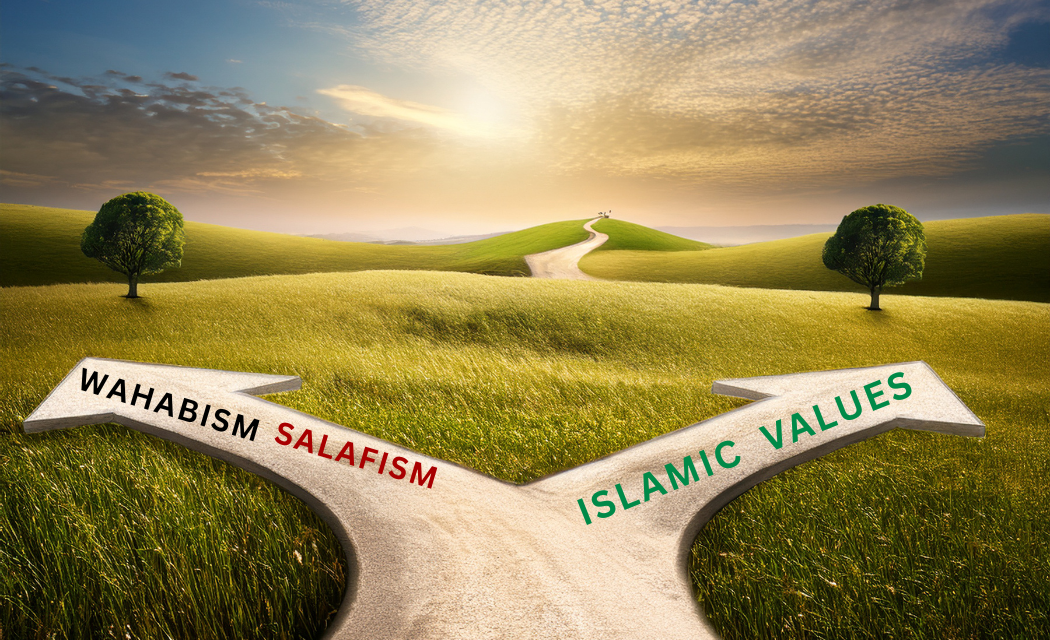
Islam, as grounded in the Quran and the teachings of the Prophet Muhammad (peace be upon him and his family), is a faith centered on compassion, justice, mercy, and peaceful coexistence. Yet groups commonly associated with political Salafism and Wahhabi-influenced extremism have advanced interpretations that deny pluralism, restrict women’s rights, suppress education, and legitimize violence. These interpretations do not represent Islam; they represent political ideology cloaked in religious language.
Mainstream Islamic scholarship has long recognized diversity of thought as a mercy rather than a threat. The Quran itself affirms human diversity and coexistence, stating that humanity was created into different nations and communities so that people may come to know one another, not dominate or erase each other (Quran 49:13). This principle directly contradicts extremist claims that only one narrow path is valid and that all others—Muslim or non-Muslim—are illegitimate or deserving of punishment.
One of the most damaging distortions promoted by extremist movements is the use of religious coercion. The Quran explicitly rejects this approach, declaring, “There is no compulsion in religion” (Quran 2:256). Faith, in Islam, is a matter of conscience and conviction, not force. Any ideology that relies on intimidation, punishment, or violence to impose belief stands in direct opposition to Quranic teaching.
The consequences of these distortions are not theoretical—they are devastatingly real. In Afghanistan, the Taliban have imposed sweeping bans on girls’ education, women’s employment, and women’s participation in public life. These policies have been documented extensively by Human Rights Watch and the United Nations Assistance Mission in Afghanistan (UNAMA), both of which describe the situation as a grave and ongoing human rights crisis that disproportionately harms women and girls and undermines the social and economic future of the country (Human Rights Watch; UNAMA reports, 2023–2024).
Similarly, violent extremist groups such as ISIS and al-Qaeda—whose ideology draws on rigid, exclusionary interpretations associated with Salafi-jihadism—have carried out mass killings, suicide bombings, and attacks against religious minorities and fellow Muslims alike. According to the Global Terrorism Index published by the Institute for Economics & Peace, the overwhelming majority of victims of jihadist terrorism worldwide are Muslims themselves. These groups have destroyed communities, erased cultural heritage, and inflicted trauma that will last generations, all while falsely claiming religious legitimacy.
Even in countries where violence is less visible, the legacy of extremist ideology has shaped laws and social practices that restrict freedom and opportunity. In parts of the Middle East, women’s legal status, access to education have been curtailed under interpretations of religion that human rights organizations consistently criticize as discriminatory and incompatible with international law (Amnesty International; Human Rights Watch). These restrictions are political choices—not divine mandates.
The global impact of these movements extends far beyond Muslim-majority countries. Governments in Europe and North America increasingly justify broad surveillance programs, discriminatory legislation, and collective suspicion of Muslim communities by pointing to the actions of extremist groups. Reports by the ACLU and Pew Research Center demonstrate how Muslims are disproportionately affected by profiling, watchlisting, and restrictions on religious expression, often without evidence of wrongdoing. This cycle—where extremism fuels discrimination, and discrimination fuels alienation—undermines both security and social cohesion.
At Freemuslim, we assert that Muslims themselves have a moral and civic responsibility to openly reject and discredit extremist ideologies that misuse Islam for power and control. Silence allows distortion to flourish. The “bad apple” narrative cannot be ignored; when extremist movements dominate the public image of Islam, peaceful Muslims everywhere pay the price through suspicion, exclusion, and loss of rights.
Equally, the international community bears responsibility. Governments, NGOs, and policymakers must abandon simplistic narratives and engage with credible Muslim voices who advocate for pluralism, gender equality, education, and human dignity. Treating Wahhabi- or Salafi-inspired extremism as synonymous with Islam is not only inaccurate—it is harmful and counterproductive. Islam’s core values support economic freedom, social cooperation, compassion, and coexistence, values essential for stable and thriving societies.
Reversing the narrative is not about denial; it is about clarity. Extremism must be confronted decisively, but without criminalizing an entire faith or community. Islam, as taught in the Quran, calls for justice, mercy, and respect for human dignity. Any movement that strips people—especially women and minorities—of education, safety, and freedom stands outside those values.
The future of peaceful coexistence depends on our willingness to name extremism honestly, defend human rights consistently, and amplify the true ethical foundations of Islam. At Freemuslim, we remain committed to that mission—for Muslims, for non-Muslims, and for the shared humanity that binds us all.