Hate Has No Place in Houses of Worship
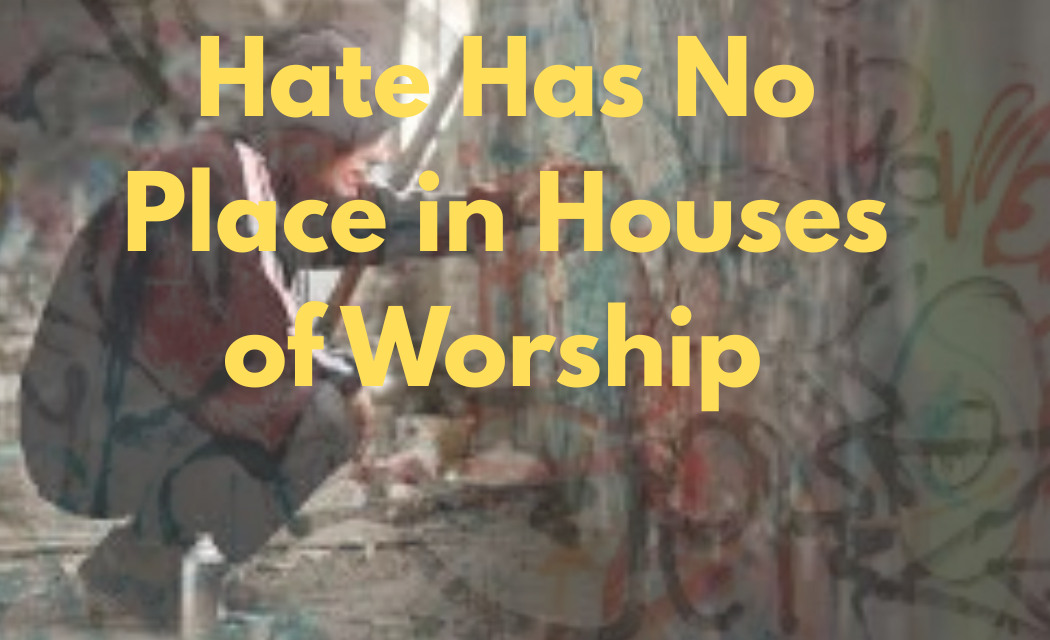
Across the United States, a troubling pattern has emerged in which mosques, Muslim prayer rooms, Churches, Synagogue and other houses of worship have increasingly become targets of vandalism, harassment, and intimidation. These acts are not merely incidents of property damage; they represent a deeper assault on the fundamental right to worship in peace and on the social fabric that binds diverse communities together.
Recent years have seen mosques defaced with hateful graffiti, prayer spaces at universities desecrated, and Muslim communities forced to heighten security around places that were intended to be sanctuaries of tranquility. These attacks often occur in moments of heightened political rhetoric or international conflict, when Muslim identities are unfairly politicized or vilified. The result is a climate in which worshipers feel unsafe in spaces that should embody reflection, spiritual grounding, and communal care.
For Worshipers, designated prayer areas are not just buildings. They are spaces where individuals seek inner peace, moral clarity, and connection with God and community. They are places of healing, reflection, and service. Violating these spaces strips worshipers of that sense of safety and dignity. It replaces calm with fear and belonging with vulnerability. When a mosque wall is defaced or a prayer room is vandalized, the harm extends far beyond bricks and mortar; it penetrates the emotional and spiritual well being of an entire community.
This issue is not unique to Muslims. Jewish synagogues, Christian churches, Sikh temples, and cemeteries across faith traditions have also been targeted in acts of hate. The rise in vandalization of religious spaces reflects a broader erosion of respect for religious freedom and pluralism. When any house of worship is attacked, the message sent is that certain identities are unwelcome, unprotected, or expendable. Such a message undermines the very principles of coexistence and mutual respect that democratic societies claim to uphold.
STATISTICS & TRENDS ( U.S., 2025 )
• Religion-based hate crimes remained at historically high levels in 2025, continuing an upward trend that began after 2021
• Vandalism and property damage continued to be one of the most common forms of hate crimes against houses of worship in the U.S.
• Incidents targeting mosques increased compared with pre-2021 levels, according to civil-rights organizations monitoring Islamophobia
• Antisemitic vandalism against synagogues and Jewish institutions remained elevated compared with prior years
• Hostile acts against churches stayed significantly higher than levels reported before the pandemic period
• Houses of worship continued to be identified by federal authorities as recurring targets for bias-motivated property crimes
EXAMPLES OF U.S. PLACES OF WORSHIP VANDALIZED IN 2025
• Islamic Center of Southern California, Los Angeles, CA
• Masjidullah Center for Human Excellence, Philadelphia, PA
• Al-Hikmah Islamic Center, Minneapolis, MN
• Multiple mosques in Texas reporting graffiti and vandalism incidents
• Temple Israel, Minneapolis, MN
• Beth Israel Synagogue, West Hartford, CT
• Jewish cemetery vandalism incidents reported in multiple U.S. states
• Catholic church properties vandalized in Midwest states
• Protestant churches reporting graffiti and threats in urban areas
• University-based Muslim prayer rooms targeted with damage or desecration
From a human rights perspective, attacks on religious spaces are a form of collective intimidation. They discourage public religious expression, isolate minority communities, and normalize hostility toward difference. This normalization is especially dangerous, as it can pave the way for more severe acts of violence. History has shown that when hate crimes against sacred spaces are dismissed or minimized, the consequences often escalate.
Director Moujtaba Akhwand v and many community advocates believe that the response to these violations must be both moral and structural. There must be a clear societal consensus that houses of worship are inviolable. Legal systems should treat vandalism, harassment, and intimidation of religious spaces as serious offenses, with consequences that reflect the gravity of the harm inflicted. When such acts are met with weak enforcement or ambiguous legal treatment, they risk becoming normalized rather than condemned.
At the same time, there is a pressing need for proactive protection. Religious institutions, particularly those serving marginalized communities, should not be left to bear the burden of security alone. Public policies should include meaningful support and incentives that allow mosques and other houses of worship to implement safety measures without fear of financial strain. Protecting sacred spaces is not a privilege; it is a shared responsibility rooted in the constitutional promise of religious freedom.
Equally important is the role of public awareness and interfaith solidarity. Communities must speak out collectively when any religious space is attacked, regardless of which faith is targeted. Silence in the face of such acts enables division, while solidarity reinforces the principle that an attack on one community’s sanctuary is an attack on the rights of all.
At its core, disturbing houses of worship disturbs the moral foundation of society itself. These spaces exist so people can pause from the pressures of daily life, reflect on their actions, seek peace, and renew their commitment to compassion and ethical living. When that tranquility is violated, the damage ripples outward, affecting not only the targeted community but the broader social environment in which trust and coexistence must thrive.
A society that truly values peace, dignity, and human rights must draw a firm line against the desecration of sacred spaces. Protecting mosques, prayer rooms, and all houses of worship is not only about security or law enforcement; it is about affirming the right of every person to seek meaning, peace, and belonging without fear. In defending these spaces, we defend the very principles that hold diverse societies together. Moujtaba Akhwand reemphasizes on the importance of peaceful coexistence and asks communities and governmental entities to unite efforts to restore peace and tranquility in different levels of the society. We can move forward and achieve great milestones in science, technology and etc. when basic and unnecessary turmoils have been eliminated and people can attend to those future related things with a peace of mind.