Austria Limits Freedom of Religion
What the Law Is
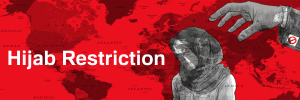
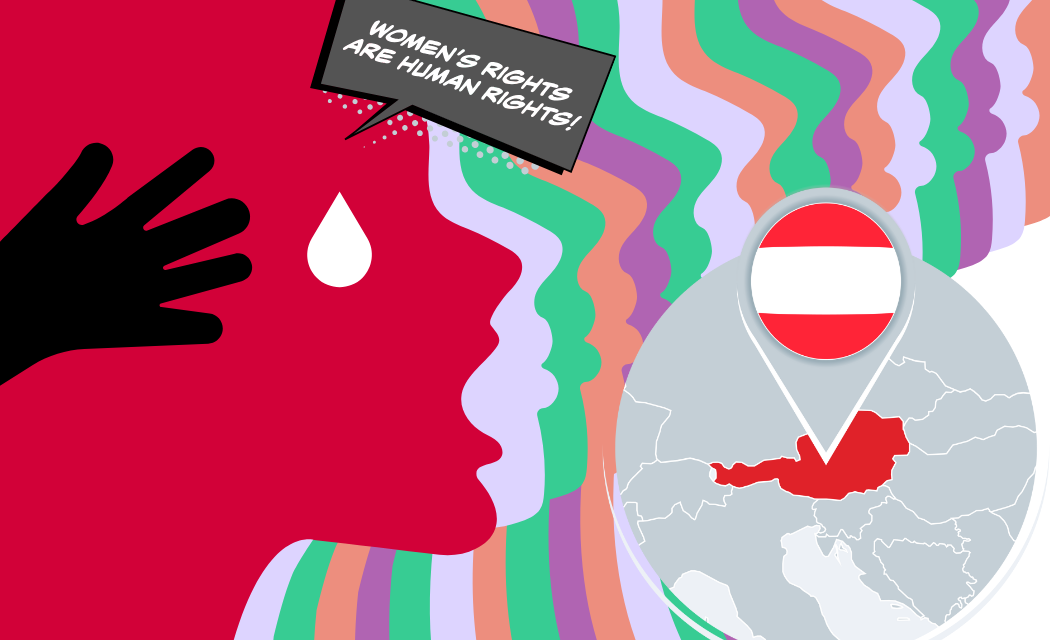
In December 2025, Austria’s Federal Parliament passed a law banning girls under age 14 from wearing headscarves (hijab, burqa, or other “Islamic tradition” coverings) in both public and private schools — to take effect with the 2026/27 school year, after an informational period beginning February 2026. 
Penalties:
• Schools first hold discussions with student and parents.
• Repeated non-compliance can lead to administrative fines (€150–€800) for guardians and, as formally drafted by the government, even possible alternative sanctions. 
Government Justification:
Officials claim it protects children’s development and gender equality, portraying the hijab as a “symbol of oppression” and a barrier to visibility and freedom for children. 
Key Legal and Human Rights Concerns
• A previous 2020 ban on headscarves for younger girls (under 10) was struck down by the Austrian Constitutional Court as unconstitutional because it discriminated against Muslims while not applying equally — a core human rights and equality issue. 
• Rights groups (e.g., Amnesty International Austria) have described the new law as discriminatory and contributing to anti-Muslim racism and stereotypes, warning it will fuel prejudice and social division. 
• Austria’s official Muslim community (IGGÖ) has stated it harms social cohesion and will further stigmatize and marginalize children rather than empower them. 
Estimated Scope of Impact
Government estimates suggest up to ~12,000 schoolgirls could be directly affected across Austria. 
Religious Demographics of Austria
Austria’s population is approximately 9.2 million (2025 estimates). Official surveys and research studies show the following approximate religious breakdown: 
Roman Catholic ~55 % Largest group, historically dominant
Protestant ~3.8 % Smaller traditional Christian group
Eastern Orthodox ~4.9 % Growth tied to Balkan immigration
Islam ≈ 8.3 % Second-largest organized religion
Jewish ~0.1 % (~10,000–15,000) Small historic community
Other (Hindu, Buddhist, etc.) ~0.6–1.2 % Very small minorities
No Religion ~22–23 % Growing secular segment
Muslim Population
• Muslims are about 8.0–8.3 % of Austria’s population — roughly 700,000+ individuals. 
• In Vienna, Muslims comprise a significant minority (~14.8 %), illustrating urban concentration. 
Other Religious Minorities
• Jewish community: ~10,000 core members (≈0.1 %), one of the smallest communities but historically continuous since medieval times. 
• Hinduism: Very small (~0.1 %). 
• Sikh community: Not prominent statistically but present as part of small South Asian minority groups (exact figures are not systematically recorded in Austria’s religious data).
• Buddhists, Jehovah’s Witnesses, and other Christian denominations: each below 1 % of the population. 
Muslim History in Austria
Muslims have a long historical presence in the region that predates contemporary immigration: 
• Early presence (9th century): Nomadic Asian tribes entered parts of what is now Austria. 
• Ottoman era (16th–17th century): During the Austrian Habsburg–Ottoman conflicts, Muslim populations were present in territories that later became modern Austria. 
• Treaty of Passarowitz (1718): Some Muslims remained in the Habsburg realm after earlier expulsions. 
• Late 19th century: After Austria-Hungary gained administration over Bosnia-Herzegovina, substantial Muslim communities came under Austrian rule. 
• 20th century onward: Large growth in Muslim population occurred in the 1960s and later with labour migration (Turkey and Yugoslavia) and refugee flows in the 21st century. 
Other Religions with Head-Covering Traditions & Ages of Maturity
Judaism
• Head coverings: Jewish females and males often cover their heads with kippah, tichel, or other coverings during religious observance.
• Age of maturity (Bat/Bar Mitzvah):
• Girls: ~12 years, Boys: ~13 years (~becoming responsible for mitzvot).
• Ceremony: Bat/Bar Mitzvah marks religious adulthood, involving Torah reading and community participation.
Sikhism
• Head coverings: Turbans (dastaār) for men and sometimes for women as expression of devotion and identity.
• Age of maturity: Sikh youths may take the Amrit initiation (Khalsa) typically around adolescence (no fixed age, voluntary).
• Ceremony: Amrit Sanchar is the initiation into the Khalsa.
Hinduism
• Head covering: Varies widely by tradition; women may cover heads during rituals or temple visits.
• Age of maturity: Many Hindu traditions mark Upanayana (sacred thread ceremony) for boys (varies by caste), typically ~8–16; girls may have similar rites in some communities.
Orthodox Christianity & Catholicism
• Head covering: Some Orthodox and Catholic women cover heads in church liturgically.
• Age of maturity: Confirmation typically in adolescence (varies by parish, often ~12–14).
A critical note: Austria’s law specifically targets “head coverings according to Islamic tradition”, ignoring other religions’ practices and repeatedly labeled by critics as discriminatory. 
Austria’s decision to target Muslims reflects a misunderstanding of the real issue and a failure to distinguish between face covering (burqa/niqab) and head covering (hijab). The Qur’an addresses modesty without mandating face covering. Surah An-Nur (24:31) while Surah An-Nur (24:30) commands men to lower their gaze and behave modestly—highlighting that modesty applies to both genders.
Islam promotes dignity and privacy through voluntary guidance, not coercion. The Qur’an is explicit: “There is no compulsion in religion” (2:256). Accordingly, no family should force religious practices upon their children.
Governments have repeatedly adjusted age limits for activities such as drinking or smoking, recognizing that such regulations change over time. Religion, however, is not a privilege regulated by shifting laws. Religious freedom is a fundamental human right, not comparable to age-restricted activities.
Freemuslim’s Inclusion Forum has received numerous concerns from Austrian Muslims regarding this policy. Moujtaba Akhwand urges Austrian authorities to reconsider and ensure that minorities can practice their faith freely, without legal limitations.
Educational initiatives promoting mutual respect and recognition of diversity within Austrian society would strengthen social cohesion far more effectively than restrictive measures.
Social & Security Impacts of the Ban
Evidence & Scholarly Commentary
Scholarly research on migration and integration in Austria shows that excluding and marginalizing religious minorities correlates with reduced social cohesion, increased alienation, and vulnerability to social division — produced when policies single out communities rather than include them in civic life. 
Rights advocates also warn that laws singling out Muslims will not deter extremism but perpetuate negative stereotypes, heighten prejudice, and increase discrimination against innocent individuals — exacerbating security risks rather than reducing them. 
Specific Risks of the Ban
• Marginalization & Isolation: Targeted laws increase feelings of exclusion among affected minorities, which academic research links to diminished trust in institutions and segregation. 
• Educational barriers: Forcing visible religious compliance choices may lead families to consider alternative schooling or withdrawal, creating parallel educational paths that weaken shared civic identity and social integration.
• Fueling Anti-Minority Sentiment: Human rights groups argue the law may entrench anti-Muslim attitudes, inspiring broader prejudice and hate incidents. 
Policy Recommendation & Call to Action
Austria Must Reverse the Ban and Uphold Religious Freedom
Given the discriminatory structure of this law, its targeted effect on Muslims, and historical evidence that such exclusions reduce social cohesion and trust, Austria should:
1. Immediately reverse the ban and align with constitutional protections of religious freedom and equality before the law (as previously upheld in 2020). 
2. Facilitate inclusion of all religious minorities by allowing neutral accommodation of head coverings alongside public safety and equality.
3. Invest in intercultural education and dialogue rather than exclusionary practices.
4. Ensure protections for religious schools and private education that align with Austria’s legal obligations under human rights conventions.
This approach not only strengthens social peace and security, but also reflects respect for Austria’s diverse religious tapestry — from Muslim and Jewish communities to Orthodox Christians, Sikhs, Hindus, and others.